
Overcoming Gaps: IT Staff Augmentation vs In-House Teams


Share the page:
Most teams compare an hourly contractor rate against a salary, decide the contractor looks expensive, and stop there. That comparison leaves out the eight to twelve weeks the role sits empty, the ramp-up before anyone is productive, and the severance exposure when the initiative ends. With 72% of employers reporting difficulty filling roles, the vacancy is no longer a short gap you can absorb. IT staff augmentation wins when the work has an end date and the skill is scarce. In-house hiring wins when the capability is permanent and the knowledge has to stay. This guide covers where the line sits and how to check a supplier before you sign.
Introduction
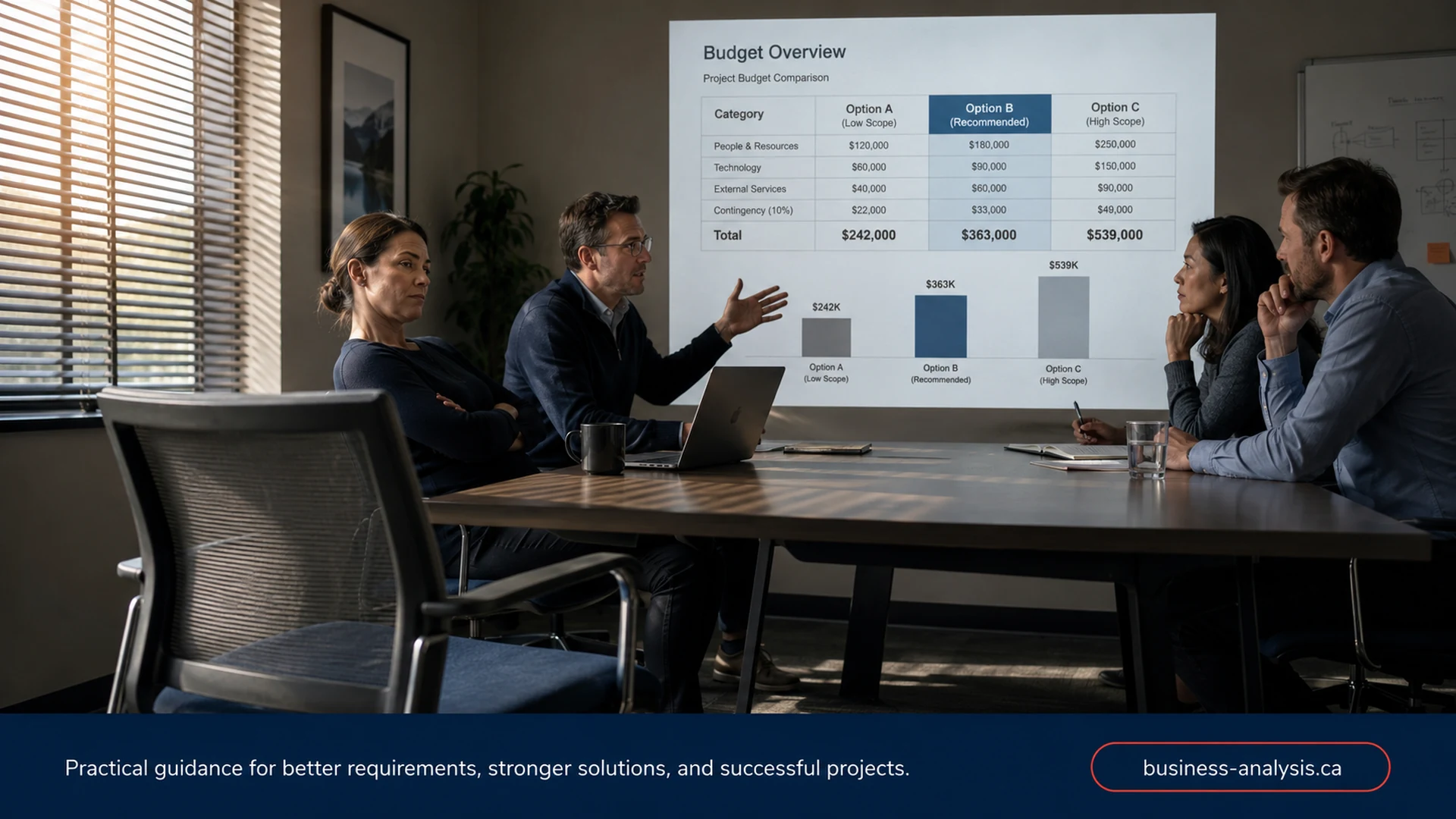
The conversation usually starts the same way. Someone puts two numbers on a slide: a contractor day rate and an annual salary divided by working days. The contractor number is bigger. The meeting ends.
That slide is missing most of the decision. It compares the cost of having someone against the cost of having someone, and skips the part where you have nobody for two months while the requisition works its way through approvals.
What is the real difference between IT staff augmentation and hiring in-house?
Staff augmentation buys capability for a defined period without adding permanent headcount. In-house hiring buys capability permanently and takes on everything that comes with permanence, including the recruitment cycle, benefits, management overhead, and the cost of getting it wrong.
The difference that matters on a project is timing. A permanent hire is a bet you place before you know what the work will need. An augmented resource is a bet you place after.
There is also a supply problem sitting underneath the decision. ManpowerGroup's 2026 Talent Shortage Survey, covering 39,000 employers across 41 countries including Canada, found that 72% of employers report difficulty filling open roles. When three out of four employers are competing for the same shortlist, "we will just hire someone" is a plan with an unstated timeline attached.
Key Takeaway: Price the vacancy, not only the resource. An empty seat on a funded project costs more per week than either option.
Not sure which side your situation falls on? Our IT Staff Augmentation practice covers short-term placements and full delivery teams. Book a free consultation.
What does each model really cost?
Both models carry costs the other does not. The comparison below is the one to put on the slide, because it is the one that changes decisions.
Look at the last row. It is the one nobody prices and the one that ends up mattering most. A bad permanent hire on a small IT team is a two-quarter problem. A bad contractor is a phone call.
Look at the second-to-last row as well, because it cuts the other way. Everything an augmented analyst learns about your systems walks out with them unless somebody wrote it down. That is a contract term, not a hope.
Key Takeaway: If your comparison has two numbers in it, it is not finished. Seven components belong on the slide.
When should you choose in-house IT staff over IT consulting services?
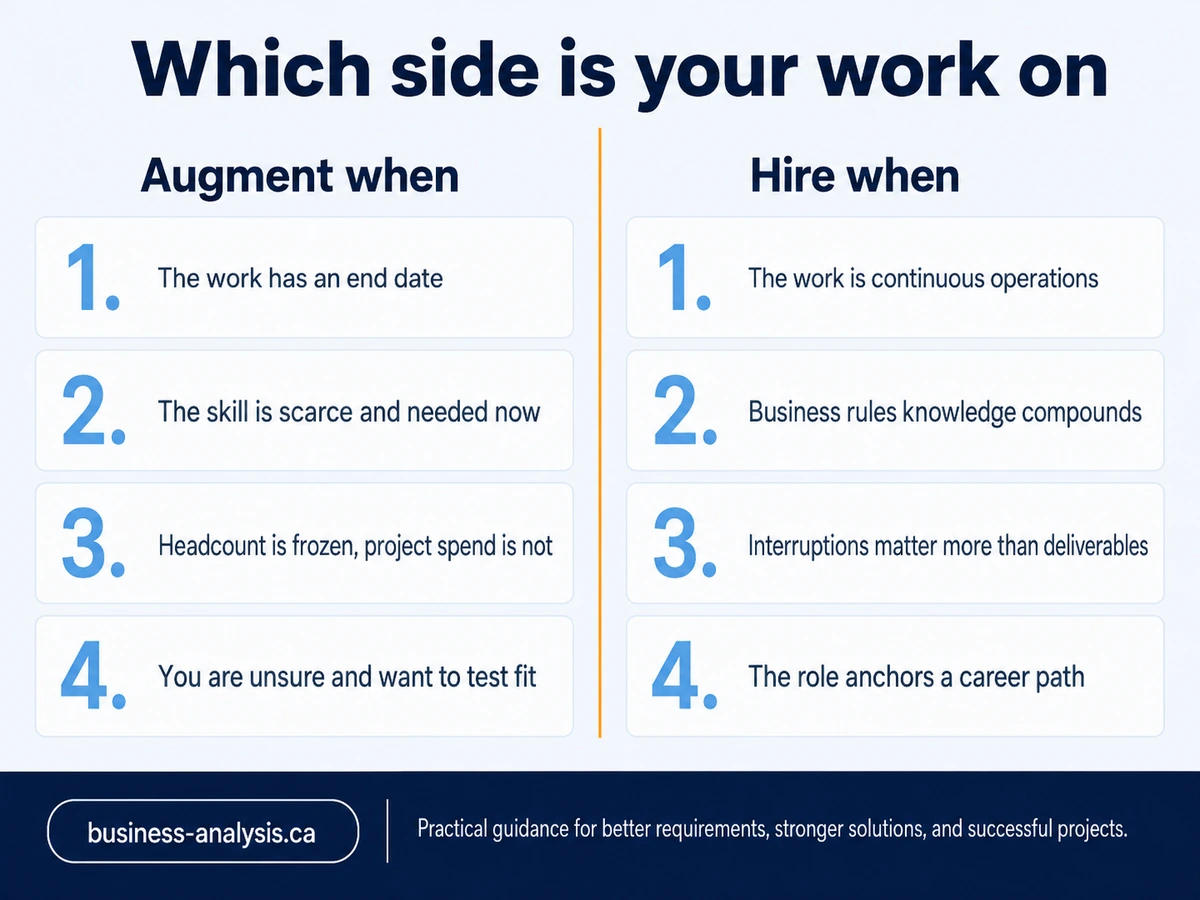
Hire in-house when the capability is permanent, the domain knowledge compounds, and the role will still exist in three years.
I would rather lose an engagement than win one that should have been a hire, so here is the honest version. Choose the permanent hire when:
- The work is continuous operations rather than a funded initiative with an end date
- The role requires deep, accumulated knowledge of your business rules
- You need someone available for interruptions and unplanned work, not scoped deliverables
- The role is a stepping stone in a career path you are building internally
The comparison of it consulting services vs in-house it staff usually comes down to whether the work has an end date. Initiatives end. Operations do not. Match the employment model to the shape of the work rather than to the budget line it is easiest to approve.
The pattern I see most often is the reverse of what people expect. Organizations hire permanently for project work, then have an awkward conversation eighteen months later. And they contract for operational work, then renew the same contractor for four years at a premium rate while everyone pretends it is temporary.
Key Takeaway: If you cannot name the date the work ends, you are describing a permanent role. Hire for it.
When does staff augmentation earn its rate?
It earns the rate when the skill is scarce, the need is bounded, or the risk of a wrong permanent hire is high.
Four situations where the maths clearly favours augmentation:
- A funded initiative with a hard deadline and a skills gap you cannot close in twelve weeks
- A specialized capability you need for one phase, like data migration or requirements for a package selection
- A hiring freeze that blocks headcount but not project spend, which is common and worth naming out loud
- A role you are unsure about, where a contract-to-hire arrangement lets both sides test the fit
A business analyst contract is a good example of the third and fourth cases together. The analysis load on a project is front-heavy and then drops. Hiring permanently for the peak means carrying the trough.
Key Takeaway: Bounded work with a scarce skill is the clearest case for augmentation. Everything else deserves a harder look.
How do you evaluate IT staff augmentation companies?
Judge the supplier on how they handle the parts of the arrangement that go wrong, because the good parts look identical across every vendor you talk to.
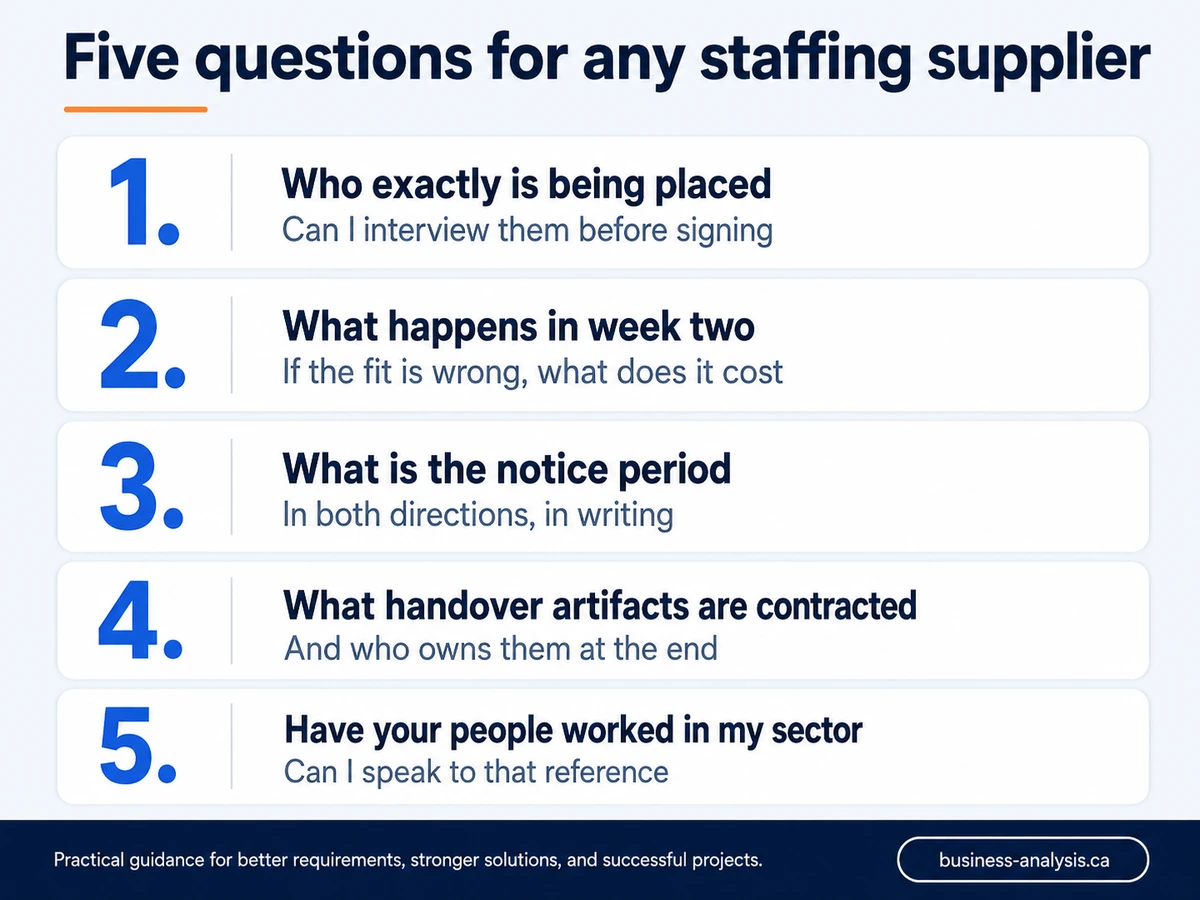
Five questions that separate suppliers quickly:
- Who exactly is being placed, and can I interview them before signing?
- What happens in week two if the fit is wrong, and what does that cost me?
- What is your notice period, in both directions?
- What handover artifacts are contracted, and who owns them at the end?
- Have your people worked in my sector, and can I speak to a reference from that work?
Watch how a supplier answers the second and fourth questions. Firms selling bodies get vague there. Firms selling outcomes have a written answer ready, because they have needed one before.
Rate transparency is worth asking about directly. Ask what portion of the rate reaches the person doing the work. You will not always get a number, and the reaction to the question tells you something regardless.
Key Takeaway: Contract the exit and the handover on day one. Both are cheap to negotiate before signing and expensive to negotiate after.
Frequently Asked Questions
Is IT staff augmentation cheaper than hiring in-house?Per hour, no. Per outcome, often yes on bounded work. The hourly rate is higher than a salary-derived hourly cost, but it carries recruitment, benefits, equipment, and exit risk that the salary number leaves out. It also removes the vacancy period, which is where most of the hidden cost sits on a funded project. On continuous operational work lasting years, in-house is usually the lower total cost.
What is the difference between staff augmentation and outsourcing?Staff augmentation places people inside your team, under your direction, following your processes. Outsourcing hands a defined scope to an external provider who manages the work and delivers a result. Augmentation keeps control and accountability with you. Outsourcing transfers both, along with the coordination overhead of a boundary between two organizations.
How long does it take to place an augmented IT resource?Days to a few weeks, depending on how specialized the skill is and whether the supplier already has the person available. Compare that against a permanent requisition, where posting, screening, interviewing, offer, and notice period commonly stack up to two months or more before anyone starts work.
Can a contract business analyst work on regulated or public sector projects in Canada?Yes, subject to the security clearance, residency, and procurement requirements of the specific engagement. Clearance level is worth confirming early, because it is the constraint most likely to disqualify an otherwise strong candidate and the one with the longest lead time to resolve.
Conclusion
The choice is not a philosophy. It is a question about the shape of the work in front of you. Bounded initiative with a scarce skill, augment. Continuous capability your business will still need in three years, hire.
If you are staring at a funded project and an empty seat and you are not sure which side you are on, book a free consultation. We will tell you when hiring is the better answer, and we place BA roles when it is not.
Sources
- ManpowerGroup, 2026 Talent Shortage Survey, February 2026. https://www.manpowergroup.com/en/news-releases/news/global-talent-shortage-reaches-turning-point-as-ai-skills-claim-top-spot